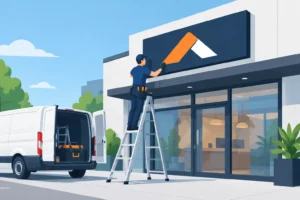
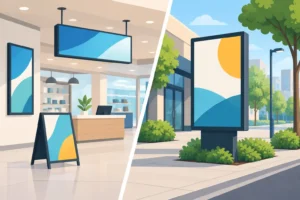
A banner has only a few seconds to do its job. At a busy exhibition hall, along a retail walkway or outside a new café, it must catch the eye, communicate the message and still look like your brand. Effective large format banner printing is therefore not simply about making artwork bigger. It is about choosing a format that suits the location, viewing distance, weather conditions and the action you want people to take.
For Singapore businesses and event organisers, banners remain one of the most versatile ways to build visibility quickly. They can announce a launch, guide visitors, frame a stage, promote an offer or turn a plain frontage into a recognisable brand moment. With the right material, finishing and artwork preparation, a banner becomes a hardworking asset rather than background decoration.
What large format banner printing should achieve
Before selecting a size or substrate, decide what success looks like. A banner for a one-day roadshow has different priorities from a long-term outdoor installation. The first may need to be lightweight, quick to mount and easy to transport. The second needs greater resistance to rain, wind and prolonged sun exposure.
Start with the message. A passer-by should understand the central idea at a glance: an opening date, headline offer, event name, directional cue or brand statement. Trying to fit a brochure’s worth of copy into a large banner usually weakens the result. Bigger print gives you more space, but it does not create more attention.
Think too about where people will stand. Text that looks generous on a laptop can appear surprisingly small from across a hall or road. A storefront banner may be read from several metres away, while a stage backdrop needs to work for both the audience in the room and photographs taken from the rear. Scale, contrast and a clear visual hierarchy matter as much as the printed dimensions.
Choosing the right banner material
Material selection has a direct effect on appearance, durability and budget. There is no single best option. The right choice depends on whether the banner will be displayed indoors or outdoors, how long it will be used and how it will be installed.
PVC vinyl for dependable promotional displays
PVC vinyl is a familiar choice for retail promotions, event branding, building frontages and outdoor campaigns. It delivers strong colour, a substantial feel and good durability. It is well suited to banners that need to withstand regular handling or short-term outdoor exposure.
For a banner fixed to a wall, fence or frame, vinyl provides a clean, solid printed surface. If it will be used repeatedly, ask about reinforced edges and eyelets. These small production details help distribute tension and reduce the risk of tearing around fixing points.
Mesh banners for windy locations
Mesh banner material contains tiny perforations that allow air to pass through. This reduces wind pressure, making it a sensible option for fences, scaffolding and exposed outdoor spaces. From a distance, the printed design still reads clearly, although colours may look slightly less dense up close because of the perforated surface.
This is a practical trade-off. A solid banner may offer richer colour, but in a windy location it can behave like a sail. A mesh option is often the safer and more durable decision when airflow is a genuine concern.
Fabric for refined indoor branding
Fabric banners bring a softer, more premium finish to conferences, retail interiors, media walls and corporate events. They are less likely to reflect harsh lighting and can create an elevated visual feel for brands that want a polished presentation. Fabric is also convenient when portability matters, as many displays can be folded for transport.
The material is not automatically the right answer for every application. Fabric may require more careful handling than vinyl, especially around spills, creases or outdoor use. For a high-traffic food and beverage activation or an outdoor promotion, a more hard-wearing substrate may make better commercial sense.
Get size and viewing distance right
The most common banner mistake is designing at the final size without considering how it will be read. Instead, work backwards from the viewing distance and the physical space available. Measure the installation area before artwork is approved, including obstacles such as doors, columns, windows, railings and existing signage.
For close-up displays, such as a counter banner or queue divider, customers can take in smaller details, product images and supporting copy. For a banner viewed from across an atrium or exhibition aisle, the headline and logo should do the heavy lifting. A concise message with a visible call to action will usually outperform a detailed layout.
Image quality deserves equal attention. A photograph that appears sharp on screen may become pixelated when enlarged. Use high-resolution images and, where possible, vector logos and graphics. Vector artwork retains crisp edges at large sizes, which is particularly valuable for brand marks, text and icons.
If your artwork is being supplied by different teams or agencies, set clear specifications early. Confirm final dimensions, scale, bleed, colour mode and finishing positions before production begins. This avoids a logo being too near an eyelet, an important line of copy disappearing into a folded edge or a background image ending awkwardly at the trim.
Design banners for immediate recognition
Large banners reward confident design. A strong layout generally has one focal message, supported by a recognisable logo, relevant imagery and only the information needed to prompt the next step. That could be visiting a stand, scanning a QR code, entering a shop or remembering a launch date.
Colour should work for the setting, not just on a brand guideline document. A pale yellow headline can look appealing on screen but disappear under bright lighting. Dark text on a light background, or light text on a deep, consistent colour field, often gives better legibility. Keep contrast high, especially for essential copy.
Avoid placing critical text too close to edges. Banners can shift slightly during installation, and hems, pole pockets or eyelets take up usable space. Build a safe margin into the design so the message remains intact and professional once mounted.
For campaigns using flyers, stickers, point-of-sale displays and banners together, repeat the same visual cues. Matching colours, typefaces, offer wording and product imagery make the campaign easier to recognise. A one-stop production partner can help keep those items aligned, even when they require different materials and print methods.
Finishing details that affect performance
A banner is only as practical as its installation method. Eyelets are widely used for tying or fastening banners to fences, frames and walls. Hems add strength around the edge, particularly for larger outdoor pieces. Pole pockets allow a rod or bar to run through the banner, creating a neater top or bottom edge for hanging displays.
For exhibition and retail use, a banner may be produced for a pull-up stand, X-banner frame or other portable display system. These options are useful when speed matters and the same campaign needs to move between branches, events or client meetings. The correct finished size is essential, as every display system has its own requirements.
Discuss how and where the banner will be installed before placing the order. A banner that is beautifully printed but difficult to secure can cause delays on event day. If installation support is needed, arrange it alongside production rather than treating it as an afterthought.
Plan around deadlines without compromising quality
Promotional banners are frequently linked to fixed dates: a grand opening, trade show, festive campaign or product launch. Allowing time for artwork checks, proofing, finishing and delivery gives you more choice and reduces last-minute pressure. It also makes it easier to coordinate banners with brochures, packaging, apparel and event materials.
That said, urgent requirements do happen. When timing is tight, provide final artwork, exact dimensions, intended use and delivery details from the start. Clear information helps the production team recommend a practical material and finishing route without unnecessary back-and-forth.
At 2B Printing, large-format displays can sit alongside your wider campaign requirements, from everyday promotional print to signage and event production support. This keeps your brand presentation consistent while helping your team manage timelines, specifications and costs with greater confidence.
The best banner is not necessarily the largest one or the one with the most effects. It is the one that looks right in its setting, survives the demands placed on it and gives people a clear reason to notice your brand.