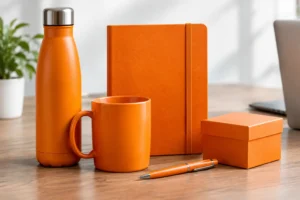
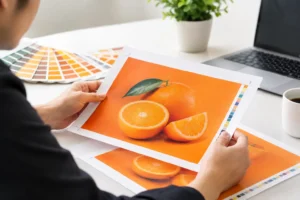
A new menu arrives with the wrong logo shade. A campaign banner looks excellent on screen but disappears under venue lighting. A box feels too thin to protect its contents. These are not minor production details. They are moments when customers form an opinion of your business. The right Singapore print shops help prevent them by turning an idea, a file or a rough brief into physical materials that look considered, work hard and represent your brand properly.
For a growing business, print is rarely just one product. It may begin with business cards and invoices, then expand into window decals, product labels, retail packaging, event backdrops and staff uniforms. Managing each requirement through different suppliers can slow approvals, create inconsistent colours and make costs harder to control. A one-stop production partner gives your team a clearer route from concept to finished item.
What to look for in Singapore print shops
The best choice is not necessarily the supplier with the lowest headline price or the largest list of machines. It is the shop that understands what the printed piece needs to achieve. A flyer needs to be easy to scan and affordable to distribute. A premium brochure may need texture, weight and finishing that encourage people to keep it. A food pouch must protect the product while carrying the brand clearly from shelf to delivery bag.
Start by considering breadth. A supplier that can handle business stationery, marketing collateral, signage, packaging, display systems and branded merchandise reduces the need to explain the same brand requirements repeatedly. This matters when a launch involves several touchpoints: a catalogue for sales meetings, stickers for product samples, banners for a pop-up and paper bags for purchases.
Responsiveness matters just as much. Print production often works to a fixed date: an exhibition opening, a product release, a corporate event or a store launch. Ask how artwork checks are handled, what information is needed before production begins and whether express options are available when plans change. Fast turnaround is valuable, but it should not mean skipping proofing or choosing a finish that does not suit the intended use.
Pricing should be transparent enough for teams to make sensible decisions. The cost of a job changes with quantity, size, material, number of colours, finishing, delivery and production method. A reliable quote lets you compare options without guessing where later charges may appear.
Match the print format to the job
Digital and offset printing both have a place in commercial production. Digital print is often ideal for short runs, variable information and urgent work. It can suit limited campaign materials, personalised invitations, small batches of booklets and business essentials needed quickly. Offset printing becomes more attractive at higher quantities, where consistency and unit economics can be particularly strong.
The right method depends on the job rather than a fixed rule. If you are testing a new product label, ordering a smaller digital run can reduce risk and leave room for revisions. If the design is approved and distribution is wide, an offset run may offer better value. A capable print partner should explain the trade-off plainly instead of steering every request towards one process.
Material selection deserves the same care. Paper stock influences how a brochure feels in the hand, how colours reproduce and whether customers perceive the item as everyday, premium or environmentally conscious. Uncoated paper can give stationery and menus a natural, tactile character, while coated stocks can make imagery and colour-rich designs appear sharper. For outdoor signage and event graphics, durability, viewing distance and installation conditions are more relevant than paper weight.
Packaging adds another layer. A retail carton, stand-up pouch or paper bag has to balance visual appeal with practical handling. Think about what it carries, how it is displayed, whether it needs to resist moisture or oil, and how much space is available for required information. The most attractive pack is not a success if it is difficult to fill, transport or open.
Finishing that earns its place
Finishing can make a printed piece memorable, but it works best when it supports the design. Foil stamping can bring attention to a logo or product name. Embossing adds a tactile detail that rewards a closer look. Spot UV can create contrast on selected elements, while die cutting can turn a conventional card, folder or label into a distinctive brand asset.
These treatments come with trade-offs. They add production steps and cost, and they can be less suitable for rushed deadlines or high-volume disposable handouts. Use them where the item has a longer life or a higher-value role: presentation folders, invitations, luxury packaging, membership cards, certificates and selected direct-mail pieces. A simple, well-printed flyer with strong hierarchy will usually outperform an over-finished flyer with a muddled message.
Build consistency across every touchpoint
Brand consistency is not limited to placing the same logo on everything. It is the relationship between colour, type, photography, material and tone from the first business card to the final event banner. When these details are aligned, customers recognise your business more quickly and your team looks more organised.
Before ordering, prepare a usable set of brand assets. This should include approved logo files, colour references, fonts or outlined text, image files at suitable resolution and clear instructions on which elements must not change. If your brand relies on a specific corporate colour, discuss how it will be reproduced across paper, fabric, vinyl, packaging and other substrates. Colours can appear different because materials absorb ink differently and lighting changes perception.
It is also worth planning print as a connected campaign rather than a series of separate purchases. A retail promotion may need posters to attract attention, shelf talkers to guide the decision, vouchers to prompt a return visit and packaging inserts to encourage repeat orders. When these items are designed and produced together, messaging and colour are easier to maintain. Your budget can then go towards the formats that genuinely influence the customer journey.
Get artwork ready before production starts
Strong artwork preparation protects both your timeline and your budget. Print-ready files should have the correct dimensions, bleed where needed, safe margins for important text and images with sufficient resolution. Small details matter: a thin border too close to the edge may look uneven after trimming, while a low-resolution product image can appear soft even on a high-quality stock.
For first-time buyers, artwork guidance is more useful than technical jargon. Tell the printer what the item is for, where it will be used and how many people need to see or handle it. That context helps them flag issues early. For example, a banner viewed from several metres away needs larger text than a counter card, and a folded brochure needs content arranged around the fold rather than simply placed on a flat page.
Proofs are particularly valuable for high-visibility work. Check names, telephone numbers, QR codes, pricing, dates and legal information carefully. Confirm that the chosen material and finishing match the intended impression. Once a large run enters production, correcting an overlooked typo can be far more costly than taking a few extra minutes to review the proof.
Plan for speed without compromising quality
Urgent print requirements are part of business life. A speaker is added to an event, a price changes, a delivery is delayed or a new sales opportunity appears. The answer is not to treat every order as an emergency. Build a small library of approved templates for recurring items such as name cards, letterheads, price cards, certificates and promotional posters. Keep editable source files organised so updates can be made quickly.
For larger campaigns, set a production schedule that works backwards from the required delivery date. Include time for artwork approval, proofing, finishing, installation where relevant and a contingency for last-minute changes. This approach gives you more choice of materials and methods, rather than forcing a compromise because only one option can meet the deadline.
When several products are required, consolidating them with one supplier can simplify coordination. 2B Printing supports businesses with everyday commercial print, packaging, signage, event materials and customised brand assets, helping teams keep orders moving without fragmented vendor management.
The printed items people touch, carry, photograph and take home continue speaking for your business after the meeting, event or purchase has ended. Give them a clear purpose, the right production choices and the attention your brand deserves.