An award is often handed over in seconds, but it can sit on a desk, reception counter or display shelf for years. That is why choosing trophy suppliers is about more than ordering an object with a name engraved on it. The right partner helps you create a physical mark of recognition that feels worthy of the achievement, reflects your organisation and arrives ready for the moment it matters.
For corporate teams, schools, sports clubs and event organisers, trophies need to balance presentation, budget, lead time and personalisation. A striking acrylic award may suit a modern sales incentive programme, while a traditional cup can bring ceremony to an annual competition. The best choice depends on the recipient, the occasion and the impression you want to make.
Start with the purpose behind the award
Before selecting a shape or material, define what the trophy is meant to say. An employee service award, a tournament prize and a client appreciation plaque all carry different expectations. The award should feel proportionate to the occasion without becoming impractical to produce, transport or display.
For recurring events, a consistent design creates familiarity and strengthens the event identity over time. You might retain the same core trophy format each year, then update the year, category and recipient details. For one-off recognition, there is more room to build something distinctive around a campaign theme, company milestone or sponsor identity.
Consider where the award will be seen after the presentation. A compact desk trophy needs clear, readable personalisation at close range. A stage award needs stronger visual presence so it photographs well from a distance. If winners will share photos online, the colours, logo placement and reflective surfaces deserve just as much attention as the wording.
What to expect from reliable trophy suppliers
Professional trophy suppliers should make the production process clear from the first enquiry. That means helping you compare suitable materials, checking artwork before production and explaining what is realistic within your timing and budget. A low unit price has limited value if the design is difficult to read, the finish looks inconsistent or delivery misses the awards ceremony.
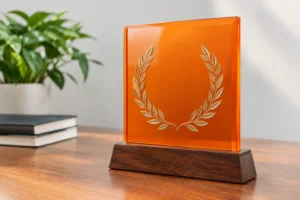
Material choice is usually the first major decision. Crystal and glass-style awards bring weight and formality, making them well suited to executive recognition, milestone celebrations and prestigious corporate events. Acrylic offers a clean contemporary appearance, flexible custom shapes and vivid printed colour. It is also often a practical option when quantity, portability or budget is a consideration.
Metal trophies and traditional cups remain effective for sporting events, school competitions and community tournaments. They immediately signal celebration and can be adapted with a personalised plate or base. Wooden plaques offer warmth and permanence, particularly for service awards, wall displays or formal acknowledgements.
The trade-off is not simply between premium and affordable. It is between choosing a material that supports the story of the award and one that fits its real-world use. A large glass piece may look impressive, but it may not be the right answer for a high-volume event with a tight delivery schedule. A well-designed acrylic trophy with crisp printing can make a far stronger impression than an overcomplicated award produced without enough time for quality checks.
Personalisation should feel intentional
Names, titles and dates turn a standard award into a personal keepsake. However, too much text can weaken the design. Keep the hierarchy clear: the event or organisation name, the award category and the recipient should be easy to identify at a glance. Supporting details can be smaller, but should remain legible.
Engraving creates a classic, tactile finish and works well on metal plates, glass and selected trophy bases. UV printing is useful where full colour logos, gradients or detailed artwork are central to the design. Some projects benefit from both, such as a colour logo paired with engraved winner information. Your supplier should advise on the right approach for the artwork and material rather than forcing every order into one production method.
Brand consistency matters here. Use the correct logo files, approved brand colours and typefaces where possible. If your event has existing banners, certificates, stage backdrops, uniforms or printed programmes, aligning the trophy design with those items creates a more polished overall experience.
Plan quantities and timing before artwork is finalised
Award orders often become urgent because recipient names are confirmed late. This is common, but it should be factored into the project plan from the beginning. Start by confirming the total number of award categories, whether there are joint winners, and whether reserve trophies are needed in case of last-minute changes.
A small allowance for spare items can prevent unnecessary stress. For example, a sports day may need additional medals for tied results, while a corporate awards night may require a replacement if a name or role changes before the event. It is usually easier to include this planning at the quotation stage than to request a separate rush order later.
Artwork approval is another critical point. Check spelling, honourifics, award categories and dates carefully before production begins. For bulk orders with individual names, provide the information in a clean, consistent format. A simple spreadsheet can reduce transcription errors and make approval faster.
In Singapore, event schedules can be especially compressed around year-end celebrations, school calendars and major corporate occasions. Allowing adequate lead time gives your supplier room to source components, complete personalisation and inspect every finished piece. If the event is close, be transparent about the deadline early. An experienced production partner can then recommend options that are achievable without compromising the final result.
Design for the presentation, not just the product
A trophy design is part of a wider recognition experience. Think about the stage, the lighting, the photography and the packaging. A trophy that looks excellent against a white background may disappear against a bright LED screen, while mirrored surfaces can produce glare under spotlights.
Shape and scale can help create a stronger moment. Vertical designs tend to feel aspirational and work well for leadership, innovation or performance awards. Wider plaques and landscape formats offer more room for detailed messages, team names and sponsor acknowledgements. If every winner receives the same award, a standard size is often the most efficient choice. If there are tiered categories, subtle differences in size or finish can distinguish top honours without making the full set look disconnected.
Do not overlook packaging. A protective box or presentation case helps prevent scratches during transport and makes the award feel more complete when it is received. This is particularly valuable for client gifts, board-level recognition and awards that will be posted to remote recipients.
Combine trophies with event and brand materials
One supplier can simplify an awards project when trophies need to work alongside certificates, event signage, table cards, photo backdrops, winner boards and branded gifts. Rather than managing separate specifications across multiple vendors, you can coordinate colours, logos and delivery dates from one production brief.
This approach is useful for corporate awards nights, retail incentive programmes, sports events and product launches. A winner may receive a trophy, certificate and customised gift item, while the venue uses matching banners and directional signs. The result feels considered because every touchpoint supports the same brand message.
2B Printing provides this one-stop solution for businesses and organisers that need awards alongside the wider printed materials that bring an event to life. From artwork guidance to tailored finishing, the aim is to make custom production straightforward while keeping the final presentation professional.
Ask the questions that protect quality
A good supplier will welcome practical questions. Ask to see material samples or examples of comparable finishes if the order is significant. Confirm how names and variable details will be checked, what the production timeline includes and how the trophies will be packed for collection or delivery.
It is also sensible to discuss artwork requirements early. Vector logo files generally produce the sharpest result for printing and engraving, while low-resolution images can look soft or pixelated on a finished award. If you are unsure what files you have, ask for guidance before approving a design.
Price should be transparent, but it should not be the only measure. Compare like for like: material thickness, customisation method, individual packaging, artwork setup and delivery can all affect the total. A clear quotation helps you make a confident decision and avoids unwelcome additions when the deadline is already close.
Recognition works best when it feels genuine. Choose an award that suits the achievement, give its design the same care you would give a customer-facing campaign, and let every recipient take home a reminder that their contribution was seen.