A chilled cabinet can expose a label to far more than cold air. Condensation, frequent handling, dripping bottles, oily food containers and repeated temperature changes can quickly reveal whether a label was specified for the job. So, can waterproof labels resist refrigeration? Yes, but only when the face material, adhesive, print method and application conditions are chosen to work together.
For food and beverage operators, retailers and product teams, the difference matters. A label that wrinkles, lifts at the corners or loses its barcode after a day in the chiller does more than look untidy. It can weaken shelf appeal, create stock-handling problems and make a carefully built brand feel less considered.
Can waterproof labels resist refrigeration reliably?
Waterproof labels can perform very well in refrigerated settings, but “waterproof” is not a universal guarantee. It usually describes the label face material’s ability to withstand water. Refrigeration performance also depends on whether the adhesive can bond to the container at low temperatures and remain secure when moisture forms on the surface.
A standard paper sticker with a basic adhesive may look perfectly fine when applied in a dry room. Place the same item in a fridge, however, and moisture can soften the paper, blur unprotected ink and cause the adhesive to loosen. A purpose-specified waterproof label is made for a different reality: damp surfaces, chilled storage, regular handling and a product that must still look sale-ready.
The safest approach is to identify the full journey of the product. Ask whether labels will be applied before or after chilling, how cold the product will be, how long it will remain refrigerated, and whether it will move between cold storage and room temperature. These details guide the material choice more accurately than the word “waterproof” alone.
The materials that hold up in a chiller
For refrigerated goods, synthetic label stocks are usually the strongest starting point. Polypropylene, commonly called PP, and polyethylene, or PE, are popular because they resist moisture and do not absorb water like uncoated paper. They remain flexible, keep their shape and offer a clean surface for branding, product information and barcodes.
PP labels are a strong all-round choice for bottles, jars, tubs and retail containers with relatively smooth surfaces. They can be supplied in white, clear or metallic-looking finishes, allowing brands to create anything from a crisp ingredient label to a transparent no-label look. Clear labels are especially effective on chilled drinks and premium jars, though the container itself must be clean and free from condensation at application.
PE is softer and more flexible. This makes it useful for squeezable bottles or packaging that changes shape during handling. If a label is too rigid for a flexible pack, it may crease or lift over time. Matching the flexibility of the label to the pack helps preserve a polished finish.
Vinyl can also be suitable for certain demanding applications, particularly where labels face heavier moisture exposure or need more durability. It is often considered for larger-format uses, chilled equipment markings or containers that receive rougher treatment. For everyday product labelling, PP or PE commonly provides the balance of performance, appearance and cost that businesses need.
Paper can still have a place
Paper labels are not automatically unsuitable for cold products. A coated paper label with suitable protection may work for short-term refrigerated display where the pack stays dry and presentation is the main priority. For example, a bakery item placed briefly in a chilled cabinet may not need the same construction as a bottled juice stored in ice or transported through humid conditions.
The trade-off is durability. If condensation is expected, synthetic stock is generally the more dependable choice. It protects the brand appearance for longer and reduces the risk of labels becoming soft, stained or difficult to read.
Adhesive is the detail that decides success
A waterproof face stock cannot compensate for the wrong adhesive. This is one of the most common causes of label failure in refrigeration.
Labels are often applied at room temperature before the product enters the fridge. In this situation, a permanent adhesive designed to tolerate cold storage may be sufficient. The adhesive has time to form a proper bond before the temperature drops, then maintains that bond in chilled conditions.
Applying labels directly onto cold products is more demanding. A bottle or tub that has already been refrigerated may carry invisible moisture or surface condensation, preventing ordinary adhesives from making full contact. For these jobs, a cold-temperature adhesive is essential. It is formulated to apply and bond at lower temperatures, subject to the exact container material and application range.
There is a practical distinction worth keeping clear: service temperature is not the same as application temperature. A label may survive at 2°C once bonded but still fail if applied at 2°C. Product teams should specify both temperatures when ordering labels, particularly for high-volume operations where staff label products straight from cold storage.
Container material also matters. Glass, PET, HDPE, polypropylene tubs and coated cartons all have different surface characteristics. Textured, curved or low-energy plastic surfaces can require more specialised adhesive selection. A small test run on the actual packaging is a smart safeguard before committing to a full production quantity.
Condensation and temperature changes test every component
The biggest challenge is often not refrigeration itself but cycling between cold and warm environments. When chilled products are brought into a warmer room, moisture can form over the label surface. The same thing can happen when stock moves from a delivery vehicle into a shop or when customers remove a product from the fridge.
A well-specified waterproof label should resist this moisture without ink smudging, edges curling or the surface turning cloudy. Still, performance depends on how the labels are printed and finished. For labels carrying dark colours, fine type or important handling instructions, durable printing and a protective finish are worth considering.
A laminate can add a clear protective layer over the printed face, helping guard against rubbing, splashes and repeated handling. Gloss laminate creates a brighter, more reflective look, while matt laminate gives a softer, premium appearance with reduced glare. Neither finish replaces the need for the right material and adhesive, but both can add useful protection and elevate shelf presentation.
For short runs, digital printing offers efficient customisation for seasonal flavours, limited editions and product variants. For larger volumes, other production methods may be more economical. The priority is always legibility: ingredients, expiry information, batch details and barcodes must remain clear throughout refrigerated storage.
Choosing labels for common chilled products
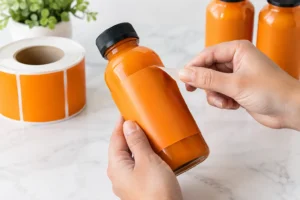
A bottled cold brew coffee, fresh juice or kombucha needs a label that stays firmly attached when the bottle sweats. A waterproof PP label with an adhesive suited to chilled storage is often a practical fit. If the product is applied cold, confirm that the adhesive is rated for cold application rather than cold service alone.
For yoghurt tubs, chilled desserts and ready-to-eat meal containers, label flexibility and container shape deserve attention. Curved lids and slightly textured plastic surfaces can put pressure on label edges. A conformable material and correctly selected adhesive help create a smooth, secure result.
Meat, seafood and fresh produce packaging may face higher moisture levels, cold-room handling and frequent contact during packing. In these environments, label durability is part of operational efficiency. The label should remain readable for stock rotation and traceability, not just look attractive at the point of sale.
For wine, craft beer and giftable chilled products, visual detail carries extra weight. Waterproof labels can support refined finishes such as clear stock, foil accents or tactile effects, provided the construction remains fit for the cold environment. Premium design should not come at the expense of practical performance.
A simple specification checklist before printing
Before approving artwork or placing an order, provide your print partner with the product’s storage temperature, label application temperature, container material and surface finish. It also helps to explain whether the item will experience condensation, freezer exposure, ice buckets, oil, frequent handling or delivery between locations.
Share the label size, pack shape and intended finish too. A flat label on a glass jar has different requirements from a wrap-around label on a squeezable bottle. If barcode scanning is required, allow adequate contrast and quiet space around the code so it remains scannable even after chilled handling.
At 2B Printing, this kind of production guidance helps turn a good-looking label into a dependable packaging asset. A sample test on your actual container is particularly valuable when launching a new food or beverage line, because it checks adhesion and appearance under real operating conditions.
Your label has a job to do long after it leaves the press. Specify it for the cold, test it on the real pack and your product can stay clear, secure and ready to make the right impression from cold room to customer’s hands.