A uniform that still looks sharp after repeated washes, a tote bag people keep using, or a bold event tee that gets photographed all start with the same decision: choosing a print method built to be seen. Screen printing remains one of the most effective ways to put strong, long-lasting branding onto apparel, fabric and selected promotional materials.
For businesses, the appeal is not simply its recognisable ink texture. It is the confidence of knowing your logo, campaign artwork or message can retain its impact through real-world wear, handling and use. When your brand needs colour that holds up and a finish with presence, screen printing earns its place.
What is screen printing?
Screen printing is a stencil-based printing process. A separate mesh screen is prepared for each colour in the artwork. Ink is then pushed through the open parts of the screen and onto the chosen material, while the blocked areas protect the unprinted sections of the design.
The ink is applied in controlled layers, then cured using heat so it bonds securely with the surface. This gives screen printing its distinctive qualities: rich colour, excellent opacity and strong durability. It is especially popular for cotton T-shirts, polo shirts, hoodies, canvas bags, uniforms, event merchandise and fabric-based promotional items.
The process is not limited to clothing. Depending on the surface, ink and artwork, it can also be used for items such as flat packaging, paper products, posters and branded display components. The best application depends on what the item needs to do, how many are required and the finish your brand is aiming for.
Why screen printing still matters for branded merchandise
Digital print methods have made short-run customisation faster and more accessible. Yet screen printing continues to be a preferred choice where bold, repeatable branding matters. The ink sits with real visual weight, particularly on dark garments or coloured materials where lighter designs need to remain crisp and visible.
It is also designed for quantity. Preparing screens requires setup time, but once the job is running, the process is highly efficient for medium and larger orders. A company ordering staff uniforms for several outlets, a retailer launching campaign merchandise, or an event organiser preparing hundreds of attendee shirts can achieve consistent results at a sensible unit cost.
There is a tactile element, too. A well-produced print can feel smooth and premium, or intentionally textured and substantial, depending on the ink system and design. That physical quality turns a simple T-shirt or tote into a more memorable brand touchpoint.
For Singapore businesses, where events, pop-ups, corporate activations and retail campaigns move quickly, durable merchandise can continue carrying a message long after the event day has passed.
When screen printing is the right choice
Screen printing works best when the artwork uses solid colours, clean graphics, clear typography or bold illustrations. Logos, mascots, slogans and graphic campaign artwork are natural fits. It is particularly effective on dark garments because an underbase layer can help brighter inks stay vivid.
Quantity makes a difference. If you need a small number of individually personalised shirts, digital garment printing may be more practical because it avoids screen setup. If you are producing larger batches of the same design, screen printing often offers stronger value and a more durable finish.
The number of colours also affects the decision. Each additional colour requires another screen, another setup stage and more production time. A one- or two-colour logo can be extremely efficient. A complex illustration with many colour transitions may be better suited to another method, unless the artwork can be simplified without losing its identity.
This does not mean simple equals ordinary. Some of the most striking branded apparel uses a limited palette with confident placement: a chest mark, oversized back print, sleeve graphic or a single memorable line of copy. Good screen printing rewards artwork that communicates quickly.
Planning artwork for screen printing
The best print begins before production. Artwork should be supplied at the correct size and ideally as vector files, such as AI, EPS or print-ready PDF formats. Vector artwork keeps lines, lettering and logos clean when scaled. High-resolution raster files can work for some designs, but low-quality images may reveal jagged edges or blurred detail when printed.
Consider the smallest parts of your artwork. Fine type, narrow gaps and intricate lines can be difficult to reproduce reliably, especially on textured fabric. Enlarging small lettering or simplifying delicate elements may improve the final result without changing the core design.
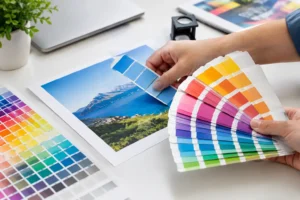
Colour should be specified clearly. Where accurate brand matching is essential, provide Pantone references or approved colour values rather than relying only on an image displayed on a screen. Digital displays vary, while physical inks and garment colours influence how the final print appears.
Placement deserves equal attention. A left-chest logo gives uniforms a polished, familiar appearance. A full-front design creates stronger campaign impact. Back prints are ideal for staff identification, event teams and sponsorship messages, while sleeve details can add a considered retail feel. Think about how the item will be worn, photographed and viewed from a distance.
Choose the garment before approving the print
Fabric composition, colour and weight all influence the result. Cotton is a popular choice because it accepts ink well and suits a broad range of finishes. Blended fabrics, performance wear and synthetic materials may need specialised inks or adjusted curing temperatures to prevent dye migration, cracking or adhesion problems.
A black heavyweight tee and a lightweight pale polyester polo may carry the same logo very differently. The garment is part of the finished product, not just the surface being printed. When creating uniforms or merchandise, request guidance on fabric suitability alongside print recommendations.
Ink and finish options that shape the result
Standard plastisol inks are widely used for their opacity, colour strength and dependable performance. Water-based inks can create a softer hand feel, as the ink absorbs more into the fabric rather than sitting prominently on top. The right choice depends on the garment, artwork and intended feel.
Speciality finishes can add another layer of brand personality. Metallic, puff, glow-in-the-dark and high-density effects can make a design feel more premium or playful. They are best used with purpose. A raised effect might suit a streetwear launch or limited-edition promotional item, but may be less appropriate for a restrained corporate uniform.
The same principle applies to colour count. More colours can deliver a richer illustration, but they also increase setup requirements and cost. A skilled production partner can help identify where colours can be combined, where contrast can do more work, and where a different finish would create a better return on budget.
Avoiding costly production surprises
The most common screen printing problems are usually planning issues rather than printing failures. Artwork may be approved without checking the final garment colour. An expected print size may be too large for smaller shirt sizes. A design may contain gradients or tiny details that do not suit the chosen process. Deadlines can also become tight when garments, artwork approvals and production schedules are confirmed separately.
A production-ready brief should state the garment style, quantities by size, print locations, artwork version, required colours, finishing expectations and delivery date. If the order supports an event, build in time for artwork checks and a sample where appropriate. A sample is especially valuable for first-time orders, critical brand colours or a new garment material.
Cost control does not mean choosing the cheapest option at every stage. It means choosing the process that fits the job. A durable two-colour print on a good-quality shirt can create more value than a complicated design on a garment that feels disposable. Your merchandise represents your business long after it leaves the office, shop or event venue.
Make every printed item work harder
Screen-printed apparel is most effective when it forms part of a joined-up brand experience. Pair staff shirts with matching name badges, retail packaging, event banners, stickers, display stands or takeaway bags. Repeating the same colours, type and visual language across these items makes a campaign feel intentional rather than assembled from separate suppliers.
For organisations managing multiple materials, a one-stop production partner can simplify specifications, timing and brand consistency. 2B Printing can help turn a single campaign concept into coordinated physical materials, from customised apparel and uniforms to signage, packaging and event essentials.
The strongest screen-printed piece is not necessarily the one with the most ink. It is the one people notice, understand and want to keep wearing. Start with a clear message, choose a material that supports it, and let the print do what it does best: give your brand a confident presence people can see and feel.