A launch can be won or lost before a customer tries the product. The invitation they open, the sample they hold, the display they notice in-store and the bag they carry away all shape the expectation. Well-chosen promotional launch products turn those early touchpoints into a clear, memorable reason to engage with your brand.
For a new café menu, a retail collection, a corporate initiative or a major event, the goal is not to print everything available. It is to create a connected physical experience that gives people the right information, a reason to act and something worth keeping. That is where a focused production plan makes every dollar work harder.
How promotional launch products create momentum
Digital advertising can introduce a launch quickly, but physical materials make it tangible. A premium box suggests care before its contents are revealed. A well-designed brochure gives a sales team confidence in a client meeting. A useful branded item can remain on a desk long after an event has ended.
The strongest campaigns use each item for a specific job. Packaging protects and presents the product. Signage captures attention from a distance. Printed collateral explains the offer. Merchandise extends recall beyond the first interaction. When the colours, typography and messaging align, these pieces feel like one brand rather than a collection of separate orders.
This consistency matters especially when a business is new, entering a new category or competing for attention in a busy retail or event environment. Customers may only have a few seconds to decide whether a brand feels credible. Clear print quality, considered finishing and practical design help make that decision easier.
Start with the launch moment, not the product catalogue
Before selecting materials, define where and how people will encounter your launch. A food and beverage brand introducing a limited-edition product at a weekend market needs a different mix from a B2B software company hosting a client briefing.
Consider the customer journey. What do they see first? What information do they need before purchasing? What will they take away? What should they remember a week later? These questions reveal the materials that deserve budget and the ones that may add little value.
For example, a retail launch may centre on window decals, shelf talkers, counter displays, paper bags and product packaging. An event-led launch may need a backdrop, directional signage, registration materials, presentation folders and branded gifts. A service launch can benefit from direct mailers, flyers, brochures and business cards that make follow-up straightforward.
Choosing promotional launch products with purpose
A practical launch kit usually combines high-visibility items with closer-contact materials. The balance depends on your venue, audience and sales route, but every piece should support a clear action: notice, understand, try, buy or remember.
Make the first visual impression count
Large-format materials do the important work of stopping people in their tracks. Banners, posters, window graphics, standees and point-of-sale displays are particularly valuable in malls, pop-ups, trade shows and busy retail spaces. They should communicate the main message quickly, not attempt to carry every product detail.
Use a strong headline, a recognisable product visual and one clear call to action. Keep vital information large enough to read from the intended viewing distance. If customers need to scan a code, ensure it is placed at a comfortable height, printed sharply and surrounded by sufficient clear space.
Material choice should follow the environment. Indoor displays can prioritise refined presentation, while outdoor or high-traffic locations may require more durable substrates and secure installation. There is little value in an impressive design if it curls, fades or becomes difficult to read halfway through the campaign.
Give customers something useful to take away
Handouts work best when they earn their place in a customer’s bag. A flyer can carry an opening offer or event schedule. A folded brochure can explain a product range, pricing structure or brand story. A printed voucher gives people a timely reason to return.
For product launches with more detail to communicate, booklets and catalogues offer room for specifications, usage ideas and supporting imagery without overcrowding a display. For corporate audiences, a presentation folder with branded inserts creates a polished way to deliver proposals, product sheets or post-event information.
The format should reflect the decision being made. A quick-service promotion may only require a compact card with a compelling offer. A higher-value purchase often needs more explanation, so a brochure or booklet can be a better investment. Print is most effective when it matches the length and complexity of the buying journey.
Use packaging as a brand experience
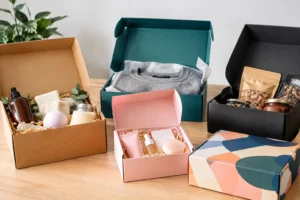
Packaging is often the only branded item a customer takes home. That makes it one of the most valuable promotional launch products for retailers, food operators and consumer brands. Beyond protection, it can communicate quality, product benefits and a distinct personality.
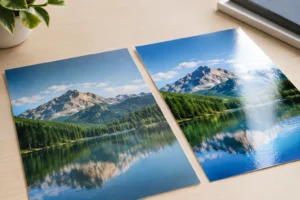
Paper bags, boxes, stand-up pouches, labels, sleeves and stickers can all be customised to fit the product and campaign. A clean one-colour design may suit a value-led launch and help control costs. A premium range might justify textured stock, embossing, foil or Spot UV to add visual and tactile impact.
These finishes should support the concept rather than distract from it. Foil can make a logo feel special, but it may not be the right choice for a high-volume, short-term giveaway. Likewise, elaborate packaging can be memorable, but it must still be practical to pack, transport, open and dispose of. The best option sits comfortably between visual appeal, unit cost and operational reality.
Extend recall with branded merchandise
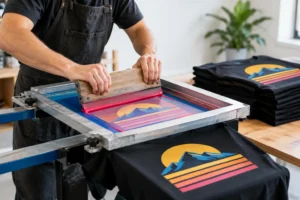
Corporate gifts and apparel can give a launch a longer life, provided they are relevant to the audience. A reusable tote bag may suit a retail activation. Branded notebooks, drinkware or apparel can add value at an internal launch, conference or client event. Trophies and plaques may also be fitting for award presentations or milestone campaigns.
Avoid choosing a giveaway simply because it is inexpensive. An item that feels unrelated or disposable can weaken the message. A smaller quantity of useful, well-presented merchandise is often more effective than a large volume of forgettable items.
Build one look across every touchpoint
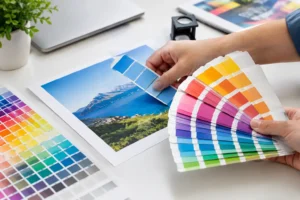
Brand consistency does not mean every item must look identical. It means they should clearly belong together. Establish the essential elements first: logo usage, core colours, typefaces, image style, campaign message and any mandatory information. Then adapt them to the dimensions and purpose of each product.
This is particularly important when several teams are involved. Marketing may manage the campaign, operations may need practical signage, and sales may require collateral for conversations. A simple artwork system prevents mismatched colours, outdated messages and last-minute reprints.
Ask for artwork guidance early if you are unsure about bleed, resolution, die lines or finishing areas. A good production partner can help identify issues before printing begins, when changes are faster and more affordable. For a multi-item campaign, working with one provider such as 2B Printing also helps keep colour, timing and production specifications aligned across print, packaging, displays and merchandise.
Plan quantities and timing realistically
Launch materials are often ordered under pressure, but rushed decisions can create waste. Start with the fixed date, then work backwards from installation, delivery, packing and artwork approval. Allow extra time for custom sizes, specialist finishes, complex packaging or large event builds.
Quantity planning should be grounded in expected footfall and distribution. If 500 people are likely to visit a pop-up, you may not need 500 premium gift packs. Reserve higher-value items for confirmed guests, purchases or qualified leads, and use flyers or vouchers for broader reach.
It is also wise to separate reusable materials from campaign-specific ones. Branded tablecloths, display systems and generic signage can serve future events. Date-specific posters, limited-time vouchers and menu inserts should be printed more carefully to avoid excess stock after the promotion ends.
Measure what the physical campaign delivers
A launch is not only about visual impact. Build a way to learn from it. Use a distinct promotional code on vouchers, track QR scans by location, ask customers how they heard about the launch, or compare sales across stores using different point-of-sale displays.
The results can guide the next production run. You may find that a simple counter card outperforms a larger poster, that a premium package drives more social sharing, or that a particular giveaway attracts the right type of lead. Print becomes more valuable when it is treated as a measurable part of the campaign, not an afterthought.
Your launch deserves more than a logo placed on a few materials. Choose products that help customers notice, understand and remember what you are bringing to market, then give every physical touchpoint the same care you give the product itself.