A business card exchanged after a meeting, a pouch picked up from a retail shelf, a banner seen across a busy event hall – each is a moment when your brand is judged in seconds. Commercial printing turns those moments into tangible proof of your professionalism, personality and attention to detail. For Singapore businesses working in competitive markets, the right printed materials do more than carry information. They help customers remember who you are and why they should choose you.
Commercial Printing Is More Than Ink on Paper
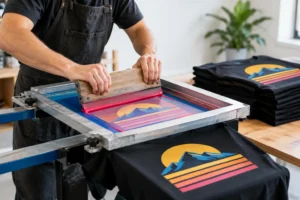
Commercial printing covers the production of business, marketing, retail and event materials at a quality and scale suited to professional use. It includes everyday essentials such as letterheads, envelopes, name cards and forms, as well as sales tools including flyers, brochures, catalogues, folders and point-of-sale displays. It also extends into packaging, signage, branded apparel, awards and promotional gifts.
That range matters because a brand rarely exists in one format. A café may need takeaway packaging, window decals, staff uniforms and loyalty cards. A corporate team might require presentation folders, event backdrops, training manuals and appreciation plaques. A growing online retailer may need product labels, stand-up pouches, thank-you cards and shipping inserts that make an unboxing feel considered.
When these pieces are planned together, they create a more recognisable brand experience. Colours remain consistent, messaging feels intentional and customers encounter the same level of quality at every touchpoint. Sourcing from one capable production partner also reduces the time spent coordinating specifications, artwork, delivery dates and multiple suppliers.
Start With the Job the Printed Piece Must Do
The best commercial printing choices begin with purpose, not a paper specification. Before selecting a size, stock or finishing option, ask what the item needs to achieve. A flyer designed to drive walk-in traffic has different requirements from a corporate booklet used to explain a complex service. A food label must support product information and shelf appeal, while a trade-show banner must be readable from a distance.
For quick, high-volume promotions, flyers and postcards offer immediate reach at a sensible cost. A well-designed brochure gives customers more time with your story and works particularly well for property, education, hospitality, professional services and high-consideration products. Catalogues and booklets suit businesses with wider ranges, detailed pricing or visual case studies that deserve a more substantial format.
For operational materials, clarity comes first. NCR forms, invoices, order pads and office stationery should be easy to use, consistent with your identity and produced accurately. They may not be the most glamorous parts of a business, but they influence how organised and dependable your company appears.
Retail and food-and-beverage businesses need to consider both function and presentation. Packaging has to protect the product, fit the way it is stored or carried, and meet the expectations of the customer handling it. A polished paper bag, customised box or printed pouch can lift perceived value before a customer has even tried what is inside.
Digital or Offset: Choose for the Run, Not the Hype
Digital and offset printing both produce excellent results, but they serve different commercial needs. The most suitable method depends on your quantity, deadline, artwork and budget.
Digital printing is often the practical choice for shorter runs, variable data and fast-moving campaigns. It allows businesses to order a modest quantity of brochures, labels or cards without committing to a large print run. It is also useful where every piece needs a different name, code, branch location or message. If a campaign is being tested, a product range is changing, or an event is approaching quickly, digital production can offer valuable flexibility.
Offset printing is usually better suited to larger quantities where unit cost becomes a major factor. It is a strong option for high-volume brochures, catalogues, stationery, packaging and other repeat-use materials. With the right lead time, it can deliver superb colour control and cost efficiency at scale.
Neither method is automatically better. Ordering too many copies simply because the unit price is lower can create waste when prices, products or brand details change. On the other hand, repeatedly placing very small orders for a stable, high-use item may cost more over time. A good print partner will help you balance volume, budget and the realistic lifespan of the material.
Paper, Material and Finish Shape Brand Perception
People notice how printed materials feel, even when they cannot name the stock or finishing technique. A thin, flimsy flyer can make a premium offer feel less convincing. A heavier card with a clean finish can make a simple name card feel more considered. The aim is not always to choose the most expensive option. It is to choose a material that fits your brand and the item’s use.
Uncoated paper has a natural, tactile character and is often a good match for stationery, writing surfaces and brands seeking a warm or understated look. Coated stocks can make photographs and colours appear sharper, making them popular for promotional flyers, menus, brochures and product imagery. Lamination adds protection and changes the feel of the surface, with matt finishes offering a refined look and gloss finishes creating stronger shine and colour intensity.
Special finishes should have a role, rather than being added for decoration alone. Spot UV can draw attention to a logo or product image. Foil stamping brings a premium accent to invitations, packaging or cards. Embossing gives a design physical depth, while die cutting can turn a standard shape into a memorable branded object. Used selectively, these details help a piece feel distinctive without making it visually busy.
Make Artwork Production-Ready Before the Clock Starts
Fast turnaround depends on artwork that is ready to print. A beautiful design can still cause delays if it has low-resolution images, missing fonts, incorrect dimensions or colours set up for screens rather than print. Building in a short artwork check before production protects both your timeline and the final result.
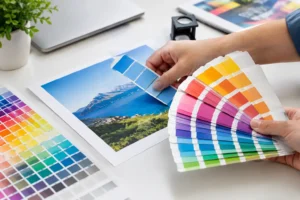
Use the correct finished size and include bleed where required, so colour and images can extend cleanly to the edge after trimming. Keep important text and logos safely inside the trim area. Images should be high resolution at their intended print size, especially for large displays and close-up product photography. For brand colours that need close consistency across different assets, discuss the most suitable colour approach with your printer at the outset.
It is also worth checking every detail that may date quickly: telephone numbers, website addresses, prices, QR codes, menu items, staff names and event information. A last-minute correction is far easier before production begins than after hundreds of pieces have been printed.
For first-time buyers, artwork guidance is not an extra luxury. It is part of making the process straightforward. Clear advice on file setup, material choices and finishing options can prevent costly reprints and help a strong concept translate into a polished physical product.
Plan Print Around Your Campaign, Event or Launch
Printing is often left until the final stage of a project, when marketing copy, product photography and approvals have already consumed the schedule. That approach creates pressure and limits your options. Plan production early enough to allow for proofing, finishing, delivery and a sensible buffer for unexpected changes.
For events, work backwards from the setup date rather than the event opening time. Signage, banners, booth graphics, brochures, name badges, vouchers and giveaways all need to arrive before the venue build begins. Consider what attendees will see from afar, what they will pick up at the stand and what they may take back to the office afterwards. Each item should support the same campaign message.
For retail launches, coordinate labels, packaging, shelf displays, inserts and promotional materials so that the product reaches customers as a complete experience. A striking label paired with generic packaging can weaken the impact. Equally, elaborate packaging is not always necessary for a product with a short shelf life or highly price-sensitive audience. The right answer depends on the product, channel and expected customer value.
At 2B Printing, a one-stop approach helps businesses bring routine print, campaign collateral, packaging and event materials together without fragmenting the production process. That means less time chasing separate vendors and more confidence that each physical asset is working towards the same brand goal.
Build a Print System, Not a Series of One-Off Orders
Businesses gain more value from print when they create a repeatable system. Set core brand rules for logos, colours, typography and imagery. Decide which items are standardised across the company, such as name cards, letterheads, folders and labels, and which can change by campaign, outlet or season. This protects brand consistency while still leaving room for fresh ideas.
Keep a record of the stocks, sizes and finishes that work well for repeat items. Reordering becomes quicker, procurement is easier to manage and different teams are less likely to produce mismatched materials. For multi-location operations, this can be especially useful: every branch can have the correct assets while retaining local details where needed.
The most effective commercial printing does not shout for attention at every moment. It makes your business look prepared, credible and easy to choose – whether a customer is holding a card, browsing a shelf or walking past your event display. Start with the impression you want to leave, then produce every detail with that purpose in mind.