A product can be ready for sale and still arrive looking unfinished. The difference is often the physical experience around it: the box a customer picks up, the display that stops them in their tracks, and the leaflet that answers a last-minute question. The best product launch collateral gives every one of those moments a clear job to do – build recognition, explain value and make buying feel easy.
For Singapore businesses, that matters whether you are introducing a new food range, opening a retail pop-up, presenting a B2B solution at a trade event or sending samples to prospective stockists. A launch is rarely one channel or one item. It is a connected campaign, and every printed piece should look as though it belongs to the same brand.
Start with the customer journey, not a print checklist
It is tempting to order a banner, flyers and a stack of name cards because they are familiar launch essentials. But collateral works harder when it is chosen around the journey from first notice to purchase and follow-up.
Ask where people will first encounter the product. On a retail shelf, packaging and shelf-ready point-of-sale materials may do most of the work. At an exhibition, a large-format backdrop and concise handout can establish credibility before your team has even started a conversation. For a product sent to creators, buyers or media contacts, presentation packaging, product cards and a personalised insert can turn a sample into a more memorable brand encounter.
Then consider what the customer needs to know at each stage. A striking display creates attention, but it cannot carry every product detail. A brochure or folded leaflet can explain features, ingredients, specifications or usage. A QR code can take interested customers to a demonstration, catalogue or ordering page, while the print piece keeps the message tangible and easy to retain.
The goal is not to print more. It is to remove hesitation with the right information in the right format.
Best product launch collateral: the core set
The strongest launch kits are built from a small number of coordinated assets rather than a scattered collection of promotional items. The exact mix depends on your sales environment, but four categories deserve early consideration.
Product packaging that earns attention
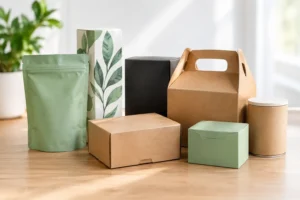
Packaging is both protection and a sales surface. In retail, it may be the first and only chance to communicate why a customer should choose your product over another. For food, beverage, beauty and consumer goods brands, clear labels, stand-up pouches, boxes, sleeves and stickers need to work at shelf distance as well as in the customer’s hands.
Prioritise legibility before decorative detail. Your product name, key benefit, size or variant and essential compliance information should be easy to find. Once that foundation is right, finishes such as foil, embossing, Spot UV or die-cut features can add perceived value and help a premium range stand apart. These details are especially effective for gifting, limited editions and products with a higher price point, but they should support the brand rather than overpower it.
Point-of-sale displays that guide the decision
A product placed in a busy shop, mall atrium or pop-up needs more than good packaging. Counter displays, wobblers, shelf talkers, window decals and display stands direct attention exactly where it is needed. They can spotlight a launch offer, clarify a product benefit or show how a range fits together.
Keep the message immediate. A customer should understand the headline in a few seconds: what is new, who it is for and why it is worth a closer look. Long paragraphs belong in a brochure, not on a small shelf sign. For short campaigns, lightweight materials may be the practical choice. For a recurring retail fixture, invest in a more durable display system that can be refreshed with new graphics later.
Brochures and product cards that explain the value
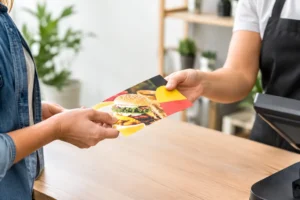
Not every product is self-explanatory. A technical service, multi-step skincare product, specialist food item or corporate solution often benefits from a well-designed brochure, booklet or product card. This is where you can turn features into practical reasons to buy.
A single product card is ideal for samples, press packs and in-box inserts. A brochure works better for a broader range, comparison information or a launch story with several sections. If your sales team will use the material in meetings, a presentation folder with product sheets can look more professional than loose pages and makes later updates simpler.
Use real hierarchy: a clear headline, short supporting copy, useful visuals and a direct next action. Dense copy and tiny type suggest that the customer has work to do. Your collateral should make the decision feel lighter.
Event and sales materials that extend the launch
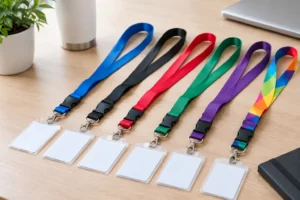
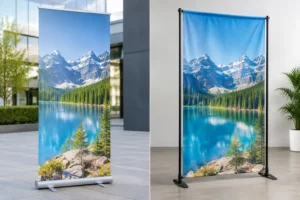
A launch event is a brief moment of high attention. Printed materials help that attention travel beyond the venue. Branded backdrops, roll-up banners, table wraps, tent cards, programmes, name badges and directional signage create a cohesive setting, while flyers, catalogues and branded bags give guests something useful to take away.
For sales teams, name cards, presentation folders, quotation forms and branded notebooks may seem secondary to the product itself. Yet these are the materials that continue the conversation after an introduction. They signal preparation and make it easier for prospects to recall who they met.
Build one visual system across every format
Consistency is what makes a launch feel established rather than improvised. Your packaging, display graphics and handouts do not need identical layouts, but they should use the same recognisable visual language: logo placement, brand colours, typography, photography style and tone of voice.
Create a simple launch artwork system before production begins. Set out the approved logo versions, colour references, type hierarchy, image treatments, required legal copy and QR code destination. Include the key launch message in one sentence, then adapt it by format. A banner may use only the promise; a brochure can add proof; packaging can focus on the product’s most compelling benefit.
This preparation also prevents costly last-minute changes. When several suppliers handle different items, colour shifts, inconsistent trimming and mismatched materials can weaken the campaign. A one-stop production partner helps coordinate those moving parts, particularly when a launch needs packaging, print, signage and event materials delivered on a tight schedule.
Choose finishes and materials with a commercial purpose
Premium finishing can make a lasting impression, but it is not automatically the right choice. The practical question is whether it improves attention, handling or perceived value enough to justify the investment.
Matte lamination can give a polished, modern look and offers added protection for frequently handled brochures or folders. Gloss can make product imagery and bright colours appear more vivid. Foil stamping draws the eye to a logo or limited-edition detail, while Spot UV creates contrast on dark or minimal designs. Die cutting can reveal a product image, make a tag more distinctive or turn ordinary packaging into a tactile experience.
Paper and board choices need the same discipline. A thick uncoated stock can suit a craft-led or premium stationery brand, while coated stocks are often better for image-heavy brochures. Packaging must also meet the demands of weight, transit, storage and intended use. The most attractive box is not a successful choice if it cannot protect its contents or hold up in a retail environment.
Request artwork guidance and, where appropriate, physical samples before committing to a large run. On-screen artwork cannot fully show texture, fold lines, foil placement or how colours will appear under shop lighting.
Plan quantities and timing without creating waste
Launch collateral has a narrow window of peak relevance. Ordering too little can leave an event underprepared or a retail rollout incomplete. Ordering too much can tie up budget in outdated offers, old packaging or materials that no longer reflect the product.
Start with the launch audience and distribution plan. Estimate footfall, expected sales conversations, sample quantities, store locations and a realistic replenishment allowance. A short-run digital print order can be a sensible route for testing a message, a seasonal activation or a first batch of packaging. Once demand and artwork are proven, larger runs may offer better unit costs.
Build in time for artwork checks, proofing, finishing, packing and delivery. Express turnaround can help when a deadline moves, but it is better used as a safeguard than a production plan. Early planning gives you more choice on materials and finishing, and fewer compromises at the point your product needs to shine.
A final pre-production check
Before placing an order, check these essentials across every item:
- Is the product name and primary message visible at a glance?
- Are brand colours, logos and fonts consistent across formats?
- Does each piece have one clear action, such as buying, scanning, booking or speaking to the team?
- Have barcodes, ingredient details, contact information and legal requirements been checked carefully?
- Are quantities, finishing, packing and delivery dates aligned with the launch plan?
At 2B Printing, the advantage of a broad production range is not simply having more items to choose from. It is being able to shape packaging, promotional print, displays and event materials into one considered brand experience, with practical guidance when specifications are still taking shape.
A well-launched product should not ask customers to piece the story together themselves. Give them a package to notice, a display to trust and a printed detail worth keeping – then let the quality of the experience carry your brand forward.