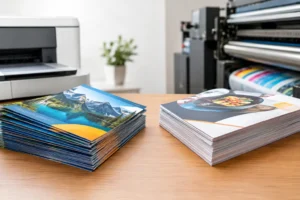
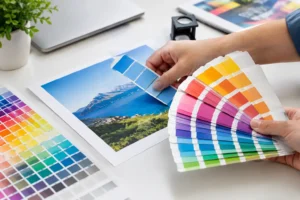
A banner can set the tone before a customer reads a single word. At a trade show, retail launch or corporate event, the material behind your artwork affects how colours appear, how easily the display travels and whether it still looks polished after a long day. When choosing PVC versus fabric banners, the right answer depends less on which material is “best” and more on where, how often and for how long your message needs to perform.
PVC brings hard-working outdoor durability and excellent value for larger promotional displays. Fabric creates a refined, low-glare finish that is especially effective indoors. Understanding the difference helps you invest in a banner that supports your campaign rather than creating last-minute installation or presentation issues.
PVC versus fabric banners: the practical difference
PVC banners are generally produced from vinyl-based material. They are smooth, water-resistant and designed to handle demanding environments. They are a familiar choice for building wraps, outdoor promotions, temporary fencing, sales campaigns and event signage where visibility and resilience matter most.
Fabric banners are usually printed on polyester textile. They have a softer surface and a more premium visual character, often resembling a high-quality display graphic rather than conventional signage. They are commonly used for exhibition backdrops, retail interiors, press walls, stage displays, showrooms and branded activations.
Both can carry vibrant artwork, logos and photography. The main distinction is how they look, feel and behave once they leave the printer. PVC is functional, firm and weather-ready. Fabric is elegant, lightweight and designed to make an impression at close range.
Choose PVC when durability leads the brief
For outdoor campaigns, PVC is usually the more dependable option. It stands up well to rain, splashes and routine handling, making it suitable for storefront promotions, construction-site signage, community events and directional banners. In Singapore’s humid, changeable weather, a material that does not readily absorb moisture is a practical advantage.
PVC also offers strong colour impact. Bold blocks of colour, large type and high-contrast campaign artwork tend to reproduce clearly, even when viewed from a distance. This makes it well suited to promotions that need to stop passing foot traffic or communicate quickly from across a road, atrium or exhibition hall.
Budget is another reason businesses choose PVC. For short-term promotions requiring several large-format pieces, it often delivers effective coverage at a sensible cost. If a retailer needs window-facing sale banners across multiple locations, for example, PVC can provide consistent brand visibility without placing unnecessary pressure on the campaign budget.
There are trade-offs. A standard PVC banner can show reflections under strong spotlights or direct sunlight, particularly on darker artwork. It also has a firmer, more utilitarian appearance than textile, so it may not be the first choice for a luxury product launch, photography-heavy backdrop or close-up hospitality setting.
PVC banners need the correct finishing for their location. Hemmed edges and eyelets are useful for hanging displays, while pole pockets, ropes or cable ties may suit other installation points. Larger banners exposed to wind need careful planning, including secure fixing and, where appropriate, mesh material that allows air to pass through.
Choose fabric for a polished indoor presentation
Fabric comes into its own where the banner is part of the customer experience. It has a matte finish that reduces glare from exhibition lighting, shopfront lighting and camera flashes. This is valuable for media walls, conferences and product demonstrations, where photographs and video are likely to be taken throughout the day.
The printed result can feel more sophisticated too. Fine details, subtle gradients and lifestyle imagery often gain a softer, more natural appearance on textile. A fashion brand launching a collection, a corporate team presenting at a conference or an F&B operator creating an inviting event space may find that fabric better reflects the intended brand character.
Portability is another major benefit. Fabric banners are lighter than comparable PVC pieces and can usually be folded for transport. For teams moving between roadshows, retail pop-ups and exhibitions, that can make storage and set-up considerably easier. A fold crease may appear after packing, but it is generally far less visually distracting than the pronounced creases that can occur when PVC is folded instead of rolled.
Fabric works particularly well with tension-frame systems. Once stretched into a compatible frame, the graphic sits smooth and taut, creating a clean, high-end display with no visible eyelets or loose edges. This gives brands a strong reusable solution for booths, photo opportunities and permanent-looking promotional spaces.
Its limitations should still be considered. Fabric is not usually the first material to specify for prolonged outdoor exposure, especially where rain, dirt and frequent handling are expected. It can be cleaned carefully in some cases, but care instructions vary by material and printing method. If the display will be used outside repeatedly, PVC is generally the safer starting point.
Compare the finish, transport and lifespan
The decision becomes easier when you assess the real conditions of use. PVC has a slightly glossy or semi-gloss character depending on the chosen stock, while fabric is typically matte. For a banner that will sit under bright retail lights or be photographed at an event, fabric’s low-reflection surface can make artwork easier to see.
For transport, PVC performs best when rolled. This protects the face of the print and prevents permanent fold lines. Fabric is more forgiving for teams with limited storage space, as it can be folded and packed into a carry bag. That convenience can reduce handling time for recurring events, though any large graphic should still be packed cleanly and kept away from sharp objects.
Lifespan is not simply a question of material strength. A PVC banner installed outdoors for several weeks may outperform fabric easily. Yet a fabric backdrop used with care for annual conferences can remain in excellent condition over many uses. The better choice is the one that matches the expected environment, installation method and replacement cycle.
Match the material to the job
A campaign’s setting usually gives the clearest answer. PVC is a sound choice for outdoor sales banners, temporary building signage, fencing graphics, directional signage and high-volume promotional campaigns. Its weather resistance and value make it ideal when the priority is reach and durability.
Fabric is better suited to indoor exhibitions, premium retail displays, branded backdrops, stage graphics and media walls. It helps create a considered environment, particularly when the display needs to sit alongside quality packaging, product displays or carefully designed interiors.
There are also cases where using both is the smartest approach. An event organiser might use PVC directional banners outside the venue and fabric backdrops inside the registration area. A retailer could use PVC for a window-facing promotional message, then fabric graphics behind the till or within a product launch zone. Keeping the artwork, colour references and logo placement consistent allows the materials to perform different jobs while presenting one coherent brand.
Do not let artwork decide the material alone
Artwork should be prepared with the banner’s final size and viewing distance in mind. A banner viewed from ten metres away needs simple messaging, large type and clear contrast. A fabric display at an exhibition booth can accommodate more detail because visitors will stand closer and spend longer engaging with it.
Photographs and fine typography deserve particular attention. Low-resolution images may look acceptable on a laptop but become visibly soft when enlarged. Logos should ideally be supplied as vector artwork, and brand colours should be checked against the intended print process. A professional production team can advise on bleed, safe areas, finishing and whether a design is likely to work better on PVC or fabric.
Consider installation before approving the artwork. Eyelets may affect where important text can sit, while a tension fabric system requires sizing that matches its frame precisely. A banner that is beautifully designed but difficult to mount will not make the lasting impression your campaign deserves.
Cost should include reuse and presentation
It is tempting to compare only the initial price per banner. A more useful calculation includes how many times the display will be used, the cost of transport, the expected installation conditions and the value of the setting it will appear in.
PVC often offers the stronger short-term value for large, hard-working outdoor graphics. Fabric may cost more initially, especially when paired with a display frame, but it can be a worthwhile investment for recurring indoor events where visual quality and convenient handling matter. For growing brands, choosing the appropriate material also prevents wasted spend on replacing a banner that was never suited to its environment.
At 2B Printing, banner production can be planned around the complete brief – from artwork guidance and sizing to material selection and finishing. That means your display can be specified for the space it will actually occupy, rather than selected from a one-size-fits-all option.
The most effective banner is not merely printed well. It arrives looking right for the venue, installs without fuss and gives your message the presence it deserves. Start with the audience’s view of the display, then choose the material that helps your brand show up at its best.