A café launching a weekday lunch offer may need 300 flyers by tomorrow morning. A retailer preparing a nationwide catalogue drop may need 30,000 pieces with identical brand colour on every sheet. Both are flyer campaigns, but they call for very different production decisions. When comparing digital vs offset flyers, the best choice is not simply about which method looks better. It is about matching quantity, deadline, budget and brand requirements to the right press.
For businesses, event organisers and marketing teams, choosing well keeps campaigns moving, controls unit costs and ensures every handout represents the brand properly.
Digital vs offset flyers: the essential difference
Digital printing sends your approved artwork directly to the printer. There are no printing plates to produce, so set-up is quick and smaller quantities are economical. It is particularly useful when you need flyers fast, want to test a campaign, or need variable details such as different names, vouchers, QR codes or event dates.
Offset printing transfers ink from plates to a rubber blanket and then onto paper. The preparation takes longer, but once the press is running, the cost per flyer drops significantly at higher volumes. Offset is a strong fit for large campaigns where colour consistency, specific paper options and premium production value matter.
Neither option is automatically the superior choice. A time-sensitive restaurant promotion can gain more from the speed of digital print than from the lower unit price available in offset. Conversely, a major retail launch can make better financial sense with offset once the quantity rises.
When digital flyers make commercial sense
Digital flyers are built for speed, flexibility and controlled quantities. If your artwork is ready, digital production can often move from file approval to finished print far more quickly than offset. That makes it valuable for event invitations, flash sales, property viewings, training sessions and short-run menu promotions.
It also gives smaller businesses more confidence to order what they need now rather than over-ordering to chase a lower unit price. Printing 500 relevant flyers for a targeted neighbourhood activation is often smarter than storing 5,000 that may become outdated after a price change or new promotion.
Fast changes without wasted stock
Campaign details change. A venue is confirmed late, an offer is extended, a phone number needs correcting, or a new QR code is required to track responses. With digital printing, revising the artwork for a subsequent batch is straightforward because there are no plates to remake.
This agility is especially useful for businesses running multiple promotions across Singapore. A fitness studio may use one flyer design but swap in different trial offers by location. A corporate team can personalise invitations for separate client groups. Digital printing supports these variations without forcing every recipient to receive the same generic message.
Best for short runs and targeted campaigns
Digital is generally the more cost-effective option at lower quantities because it avoids the plate and make-ready costs associated with offset. The precise break-even point varies by flyer size, stock, colours, finishing and production schedule, so it is worth requesting a quotation based on the actual job rather than relying on a fixed number.
For a small trial, seasonal promotion or event with a defined guest list, digital gives you the freedom to print precisely enough. It is also well suited to artwork with multiple versions, including personalised direct-mail pieces and numbered voucher campaigns.
When offset flyers deliver better value
Offset printing comes into its own when the campaign is large, long-running or highly colour-sensitive. While the initial set-up requires more time, the unit cost becomes very competitive as quantities increase. That can make a substantial difference for mass distribution, inserts, retail launches, trade campaigns and recurring promotional materials.
Offset also offers broad control over paper stocks and ink behaviour. If your flyer is intended to feel like a premium brand statement rather than a simple announcement, the production process can support that ambition.
Strong colour control for brand-critical work
For brands that rely on a signature shade, colour accuracy is not a minor detail. A recognisable corporate blue, a bold food-and-beverage red or a refined luxury palette needs to look consistent across every customer touchpoint.
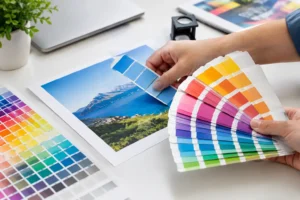
Offset printing can use Pantone spot colours alongside standard process colours, helping to achieve particularly precise and repeatable results for large runs. It is a worthwhile consideration for established brand campaigns, franchise materials and designs where the printed colour must closely match existing packaging, signage or retail displays.
Digital technology can produce excellent colour, particularly on modern equipment and well-prepared files. However, if colour matching is exceptionally demanding, discuss the target shade, paper stock and proofing expectations before production. A screen is only a guide, not a final print reference.
Better economics at volume
Offset’s key commercial advantage is scale. The longer the run, the more the initial set-up cost is spread across each flyer. For a campaign requiring thousands or tens of thousands of copies, the savings per piece can be meaningful.
The trade-off is planning time. Offset is less forgiving of last-minute artwork changes, and it is not the natural choice for a small batch needed immediately. Before committing, check that quantities are final, the promotion dates are secure and all contact details have been proofread carefully.
Paper, finish and format still shape the result
Choosing between digital and offset is only one part of the decision. Paper weight, coating, fold style and finishing determine how the flyer feels in a customer’s hand and how long it is likely to be kept.
A lightweight uncoated stock may suit a high-volume coupon handout or community notice. A thicker silk or gloss stock can give product imagery more impact for a beauty launch, menu promotion or retail event. Uncoated paper creates a more tactile, writable surface, while coated stocks can make photographs and vibrant graphics appear sharper.
For higher-impact work, consider whether a finish genuinely supports the message. Spot UV can add contrast to a logo or product image. Foil can create a premium focal point for an invitation or luxury offer. Die cutting can turn a standard rectangle into a memorable brand piece. These choices are effective when used with purpose, not simply added for decoration.
Keep in mind that paper and finishing choices can affect turnaround time, minimum quantities and budget. A clear production brief makes it easier to find the right balance.
How to choose the right flyer printing method
Start with the campaign rather than the press. Ask when the flyers are needed, how many people must receive them, whether information may change, and what role the piece plays in the customer journey.
Digital printing is usually the practical route when speed matters, quantities are modest or content needs to vary. Offset is often the stronger investment when you are printing at scale, need highly controlled brand colours or want to reduce the cost per unit across a major distribution campaign.
It also helps to think beyond the initial order. If you expect to replenish the same flyer regularly, offset may become more attractive. If you are testing different headlines, offers or audience segments, digital lets you learn before committing budget to a larger run.
Prepare artwork with print in mind
Whichever method you select, a strong file avoids preventable delays. Use high-resolution images, set artwork to the required finished size, include bleed where needed, and keep essential text safely inside the trim area. Check that QR codes scan at their printed size and that contact details remain readable from a quick glance.
If your flyer will sit alongside business cards, packaging, banners or point-of-sale displays, share those references with your print partner. Matching the physical details across materials makes a campaign feel considered and keeps your brand’s voice consistent at every customer touchpoint.
Get the balance right for your next campaign
The most effective flyer is not defined by its printing method alone. It is the one that arrives on time, looks right, fits the budget and gives people a reason to act. Whether your campaign needs the responsiveness of digital or the scale of offset, 2B Printing can help turn a clear brief into polished promotional materials that make a lasting impression.
Before placing your next order, review the quantity, deadline and purpose of every flyer. That small planning step can turn a routine print job into a campaign asset your customers remember.