A strong proposal can lose impact the moment loose pages are handed across a meeting table. Custom document folder printing gives quotations, pitch decks, contracts and event materials a considered home, helping your team present every document as part of one confident brand experience.
For Singapore businesses, folders are not merely stationery. They are practical sales tools that protect important papers, keep information organised and put your logo, colours and message in front of clients at the precise moment decisions are being made. The right design makes a lasting impression before the first page is even read.
Why custom document folder printing matters
A document folder brings order to materials that are often distributed in busy, high-pressure settings. Think of a property agent presenting a sales kit, an HR team welcoming new starters, a consultant submitting a proposal or an event organiser preparing sponsor packs. In each case, the folder signals care, credibility and attention to detail.
It also gives your brand more room to speak. Unlike a business card, a folder has a larger print area for your logo, campaign artwork, contact details, product imagery or a clear call to action. A well-designed cover can be understated and corporate, bold and promotional, or tailored to a particular launch, conference or client presentation.
There is a practical benefit too. Internal pockets prevent documents from being misplaced, while a business card slit keeps contact details visible and easy to retain. When recipients take the folder back to their office, it can continue to hold reference materials long after the meeting. That extra lifespan gives your printed investment greater value.
Choose the folder format around the job
The best folder is not always the most elaborate one. It depends on what it needs to carry, how frequently it will be used and the impression you want it to create.
A standard A4 presentation folder is the dependable choice for corporate profiles, brochures, quotations and printed reports. It holds common document sizes neatly and suits almost every professional setting. If your materials include a few sheets and a business card, a single-pocket design may be all you need. For larger information packs, folders with dual pockets provide better organisation and help separate documents such as pricing, specifications and terms.
Capacity matters. A slim folder can look crisp with a small set of papers but may bow or tear when overloaded. If you regularly distribute catalogues, booklets or multiple forms, consider a spine or gusseted construction that allows more room. It will cost more than a flat folder, but the finished pack will look more polished and be easier for recipients to handle.
Some campaigns call for a more distinctive format. Landscape folders can complement wide-format brochures or architectural visuals. Die-cut shapes, custom tabs and unusual folds create stronger shelf presence for retail launches and premium presentations. These options work best when they support the campaign purpose rather than simply adding complexity.
Match size and pocket depth to your inserts
Before finalising artwork, place every item that will go into the finished folder on a table. Include your brochures, forms, product sheets, business cards, vouchers and any inserts. This simple check prevents an all-too-common issue: a folder that looks excellent on screen but does not comfortably fit the printed set.
Allow for trim tolerance and make sure key details do not sit too close to folds, pocket edges or die-cut slots. Your printer can provide a template that marks bleed, safe areas and crease lines. Using it from the start keeps the production process smooth and reduces the risk of costly artwork amendments.
Paper stock shapes the first impression
Paper is felt before it is consciously assessed. A lightweight stock may suit high-volume event handouts where cost control is the priority, while a heavier board communicates substance for proposals, corporate kits and premium client materials.
For many business folders, a sturdy coated board offers a clean, professional surface that supports sharp imagery and vibrant brand colours. Gloss lamination can make photographs and bold graphics stand out, while matt lamination creates a more refined, contemporary appearance and is often easier to write on with a pen. Neither is universally better. Gloss is energetic and eye-catching; matt is restrained and premium.
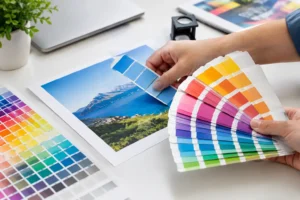
Uncoated or textured stocks bring a tactile character that can suit boutique brands, hospitality businesses and organisations with an artisanal identity. However, they may reproduce solid colours and fine photographic detail differently from coated materials. If colour accuracy is central to your brand, discuss stock options and request a proof where appropriate.
Environmental considerations may also influence the choice. Recyclable paper stocks and responsibly sourced materials can support sustainability messaging, particularly for organisations distributing high volumes of promotional packs. The key is to select a material that aligns with your values without compromising the durability required for the job.
Use finishing to add value, not noise
Finishing details turn a good folder into a memorable piece of brand collateral. They should be chosen with intention. A simple logo can gain presence through embossing or debossing, while hot stamping or foil can add a premium metallic accent for executive presentations, awards programmes and luxury retail brands.
Spot UV applies a glossy, raised-looking varnish to selected areas, such as a logo, pattern or headline. It is especially effective on a matt laminated surface because the contrast is immediately visible under light. Used sparingly, it draws attention to the right detail. Used across too much of the design, it can compete with the message rather than strengthen it.
Die cutting is another useful option. It can create business card slots, shaped windows or customised pocket contours. A window may reveal an inner brochure cover or create a visual connection between the folder and its contents. Keep in mind that specialist finishes involve additional production stages. They can elevate the outcome, but they may affect unit cost and turnaround time, particularly for short deadlines.
Design a folder that is useful after the meeting
The front cover should make your identity clear at a glance. Start with a strong logo position, reliable brand colours and enough visual breathing room. A crowded layout can weaken even excellent artwork, especially when the folder is holding multiple inserts and competing with other materials on a desk.
The inside panels are valuable real estate. They can carry a concise company introduction, service categories, contact details, a QR code or campaign message. For event folders, consider including the programme, sponsor recognition or venue information. For sales packs, the interior can direct readers to the next step, whether that is booking a consultation, requesting a quote or reviewing a product range.
Do not overlook the back cover. It is an ideal place for contact information, social handles, registration details or a short statement that reinforces your brand promise. Consistent typography and disciplined use of colour make the entire piece feel intentional.
Before sending artwork to print, check logos, image resolution, bleed, spelling and contact details. Use CMYK artwork for print production rather than relying on RGB screen colours. Small preparation steps help ensure the finished folder represents your brand exactly as intended.
Plan quantities, budget and timing sensibly
The right quantity is a balance between unit cost, storage space and how quickly your information may change. Larger print runs often reduce the cost per folder, making them suitable for evergreen corporate materials. Yet ordering too far ahead can create waste if prices, staff details, service offerings or branding are likely to change.
For a one-off conference, training session or product launch, order against realistic attendance numbers with a sensible contingency. For ongoing sales use, a repeatable design with interchangeable inserts is often more cost-effective than producing a completely new pack every time your offer changes.
Turnaround is another consideration. Standard folders require time for printing, creasing, cutting, folding and any added finishing. Build this into your campaign schedule, especially when combining folders with brochures, catalogues, business cards, signage or event materials. Working with one production partner helps keep colours, delivery dates and specifications aligned across the full set.
At 2B Printing, businesses can pair customised folders with the everyday print and promotional materials that belong inside them, supported by artwork guidance and specialist finishing options. It is a practical way to keep your brand presentation consistent while simplifying purchasing and production coordination.
A document folder earns its place when it does more than carry paper. Give it a clear role in your client journey, choose materials that suit that role, and let every handover feel like a confident extension of your brand.