Choosing the right paper is one of the most overlooked decisions in printing—but it has a direct impact on how your brand is perceived. From texture and thickness to finish and sustainability, the paper you choose shapes the look, feel, and overall experience of your printed materials.
In this guide, we break down the most common printing paper types, how they’re used, and how to select the right one for your project.
Why Paper Choice Matters in Printing
Paper is not just a surface—it’s part of your brand communication.
The texture, weight (GSM), and finish of paper influence how your audience interacts with your print. A premium, thick stock can convey quality and trust, while a lightweight or rough paper can suggest practicality or sustainability.
For businesses, this means:
- Better first impressions
- Stronger brand positioning
- Improved customer experience
If you’re exploring a full range of options, visit our Commercial Printing Solutions to understand how paper fits into the bigger picture.
Common Types of Paper Used in Printing
Different paper types serve different purposes. Choosing the right one depends on your application, budget, and brand image.
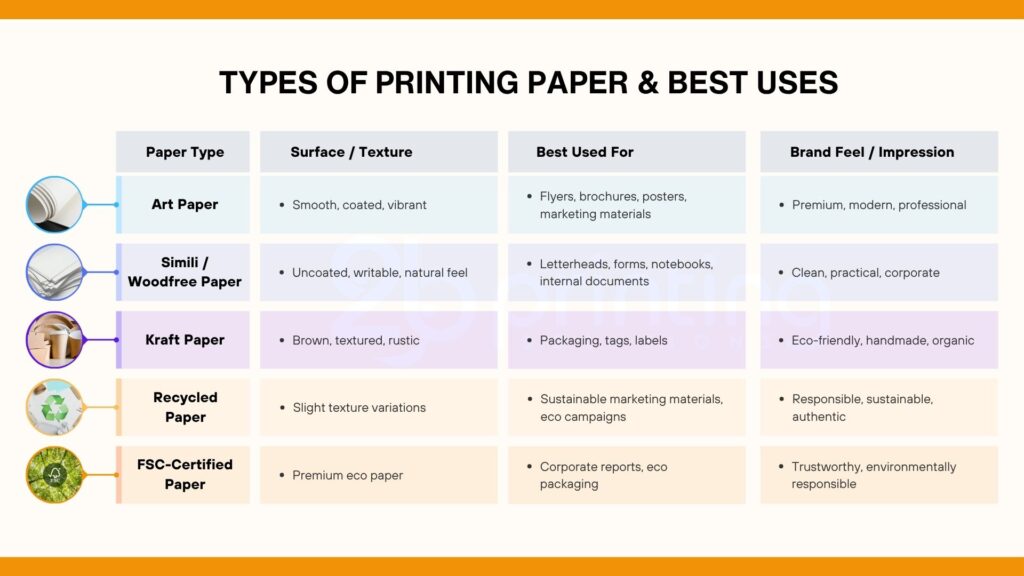
Art Paper
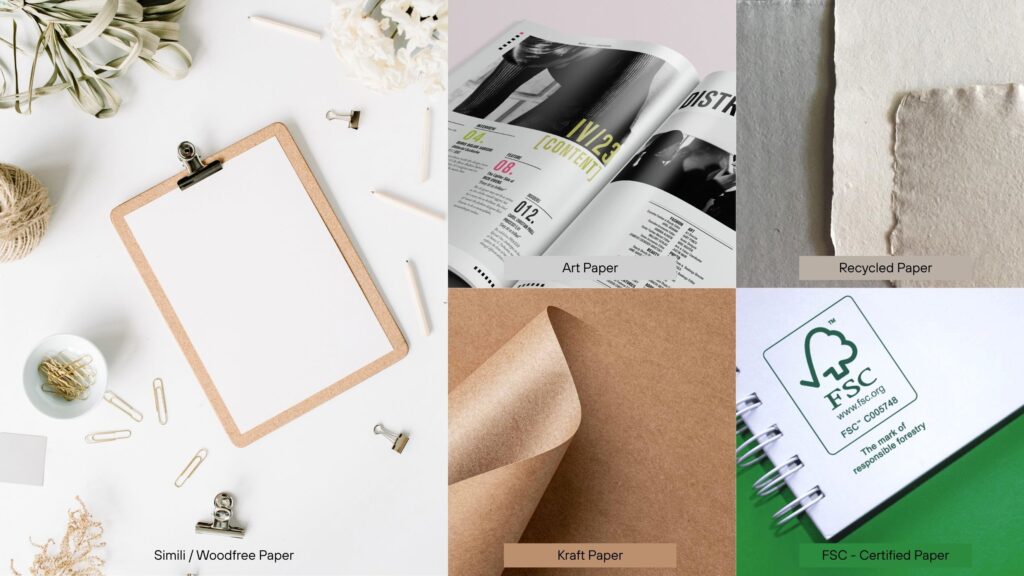
Art paper has a smooth, coated surface that produces sharp images and vibrant colours.
Best for:
- Flyers
- Brochures
- Posters
- Marketing materials
It’s one of the most commonly used paper types for high-quality visual prints.
Simili/Woodfree Paper
Simili/Woodfree paper is uncoated and writable, making it suitable for practical use.
Best for:
- Forms
- Letterheads
- Notebooks
- Internal documents
It offers a more natural feel compared to coated paper.
Kraft Paper
Kraft paper has a natural, textured look and is often associated with eco-friendly branding.
Best for:
- Packaging
- Tags and labels
- Rustic or organic brands
It creates a warm, authentic aesthetic.
Recycled Paper
Recycled paper is made from reused materials, making it a sustainable choice.
Best for:
- Eco-conscious brands
- Corporate sustainability initiatives
- Marketing materials with a green message
It may have slight texture variations, which add character.
FSC-Certified Paper
FSC-certified paper comes from responsibly managed forests.
Best for:
- Brands prioritizing sustainability
- Corporate reports
- Premium eco-friendly packaging
Using FSC paper supports responsible sourcing and environmental protection.
Learn more about sustainable printing options in our dedicated section.
Paper Thickness Explained (GSM Guide)
GSM (grams per square meter) refers to the weight and thickness of paper.
Choosing the right GSM helps ensure your print feels appropriate for its purpose.
Common GSM Uses
- 80–100gsm → Flyers, inserts, letterheads
- 128–157gsm → Brochures, posters
- 250–350gsm → Business cards, postcards, premium covers
Tip: Heavier paper feels more premium but may increase cost.
Coated vs Uncoated Paper
Understanding this difference helps you choose the right finish.
Coated Paper
- Smooth surface (matte or gloss)
- Enhances color vibrancy
- Ideal for marketing materials
Uncoated Paper
- Natural, textured feel
- Easier to write on
- Suitable for forms and stationery
For example, coated paper is often used in brochures, while uncoated paper works better for corporate documents or packaging inserts.
How to Choose the Right Paper
Selecting the right paper comes down to a few key factors:
Purpose
Is it for branding, packaging, or internal use?
- Budget
Higher GSM and specialty papers cost more.
- Brand Image
Premium brands often use thicker, coated stocks.
Eco brands may prefer kraft or recycled paper.
- Durability
Will the material be handled frequently or exposed to elements?
Matching these factors ensures your print
Common Mistakes When Choosing Paper
Avoid these common errors:
Choosing Based on Price Alone
The cheapest option may not represent your brand well.
Ignoring Usage Conditions
Outdoor or high-handling materials require more durable paper.
Overlooking Finishing
Lamination, embossing, or foil can enhance or limit your paper choice.
Not Requesting Samples
Always test paper before committing to large print runs.
Sustainable Paper Options for Modern Brands
Sustainability is increasingly important for businesses and consumers alike.
Popular Eco Options:
- FSC-certified paper → responsibly sourced
- Recycled paper → reduces waste
- Kraft paper → natural and biodegradable
Using sustainable materials not only helps the environment but also strengthens your brand’s credibility and values.
FAQ: Printing Paper Types
What paper is best for brochures?
Art paper (128–157gsm) is commonly used for vibrant, high-quality brochures.
What GSM should I use?
It depends on usage:
- Flyers → 80–100gsm
- Brochures → 128–157gsm
- Business cards → 250–350gsm
Is recycled paper good quality?
Yes. Modern recycled paper offers excellent quality while supporting sustainability.
Need Help Choosing the Right Paper?
Choosing the right paper doesn’t have to be complicated. With the right guidance, you can elevate both print quality and brand perception.
👉 Get a Quote Today
👉 Chat with Our Printing Specialist
Explore More Printing Guides